Showing posts with label Chuck and Jo. Show all posts

How Important is Duration in Sex?

We don't have to say it twice but sex is extremely important in relationships. That's why planning to have sex is always hot for you and your partner! Sex should be consistent and fun and not stressful whatsoever. But, what if you are having sex and it's just not as long as you would like? Drs. Chuck and Jo-Ann Bird, one of our personal favorite and inspirational couples, are here to discuss the importance of duration in sex and how you can make the pleasure last longer! So how important is duration in sex? Read on to find out!

* * *

It’s no secret that good sex can lead to a happier marriage, and a recent study has pinpointed that good sex is where most couples want to see improvement. Condom company Durex® polled 1,000 adults, married and single, and asked them intimate questions about their level of satisfaction with their sex lives, and the primary complaint they saw was the lack of duration in their sexual encounters.

A whopping 50 percent of people said they aren't happy with the duration (or lack thereof) they are experiencing in their sex lives. The average amount of time people reported for their average sexual encounter was 10 minutes, leading 38 percent of respondents to say that their lovemaking is over too fast. About 20 percent said they like their sexual encounters to last for at least half an hour.

The study also found, however, that about 25 percent said they actually prefer the 10 minute “quickee” to longer sessions. The study did not indicate why, but the conventional wisdom we have derived from our practice with our patients over the years is that life has become vastly more complicated. Many couples have three or four jobs between them just to make ends meet. Between the obligations of work, children and family, sometimes even having 10 minutes for a little fun can be a luxury.

A few more interesting tid-bits revealed by the study include: nearly 50 percent of all adults do not regularly achieve orgasm at the same time. In fact, more than a third of those surveyed said that it hardly ever, or never, happens.

More than three-fourths of respondents said they’ve made love in an “adventurous locale.” Among the favorite places cited in the study: the backseat of a car (though we suspect the family van may become a true multi-purpose vehicle at times), by the swimming pool (we’re assuming they don’t mean the lap pool down at the YMCA) and on a secluded beach.

But some prefer to stay at home. When they get tired of the bedroom, they send the kids out to the movies and take advantage of the air-conditioned square-footage in their homes. The favorite spots? The shower (31%), the couch (23%) and the porch (22%).

Women were asked what their fantasy locale for sex would be, and the top two answers were the Eiffel Tower and Buckingham Palace- okay, we could fill an entire blog with wisecracks on that one, so we’re just going to leave that one alone — except to say it makes us wonder if any enterprising guests of the Queen’s recent Diamond Jubilee took advantage of their backstage passes.

At the end of the day, the study’s final word of advice was something we espouse daily to our clients. If couples want to derive more satisfaction out of their sex lives, they need to talk. Discuss your needs, your wants, your fantasies and your schedules so you can not only have great sex together, but also have the proper time to spend doing it, as well.

Yours in good stamina,
Drs. Chuck and Jo-Ann Bird

Drs. Chuck and Jo-Ann Bird and are Board Certified Clinical Sexologists and Relationship Counselors. They co-counsel couples together which offers a unique and balanced male/female perspective and a combined therapy/coaching approach to helping their clients with a variety of relationship and sexual issues/concerns. Due to our last name and work they do, they've become known as “The Love Birds”. 

They have 16 + years of personal experience in a healthy, loving and successful relationship. We know how to solve problems and work through difficulties that couples may face on a daily basis. We know ways to keep relationships strong and healthy. We offer you tools and strategies that can make positive changes in your relationship. Find out more about Chuck. Alternatively, find out more about Jo-Ann. Also, follow them on Twitter and 'Like' them on Facebook.
You have read this article better sex / Chuck and Jo / for couples / sex advice / sexologists with the title Chuck and Jo. You can bookmark this page URL https://jadejurgensen.blogspot.com/2012/12/how-important-is-duration-in-sex.html. Thanks!

Creating Your Sexiest Bedroom: Do's and Don'ts


An amazing sexual relationship is, of course, created with the five pillars of an amazing relationship. But if your bedroom is keeping your sex life from moving you to the next level, consider moving furniture around. At GetLusty, we care about the feng shui of your bedroom. Why? It represents you! Here are a few tips from sex therapy and relationship counselors Drs. Chuck and Jo-Ann Bird tell you about creating the right bedroom atmosphere for great sex!

* * *

Creating a love nest is very important. But sadly, the boudoir is sometimes overlooked and severely neglected. When thinking about your bedroom, is it a place you can relax and unwind? Do you want to spend time in there? Is it romantic? Or is your bedroom a place you want to avoid? Is it cluttered or filled with work?

Think about it. “Where the attention goes, the energy flows.” Thus, if you want more energy in the bedroom, then you must put some attention into it! So let’s get started! Here are a few simple Dos and Don’ts to help you create your very own love nest.

Bedroom Don'ts:

Have computers, iPhones, televisions and other electronic work distractions in your bedroom. Studies show that couples with a television in their bedroom have half the amount of sex as couples who don’t. (However, you can have a television in the bedroom only if you use it to watch erotic videos!)
  • Work desks, office stuff, etc.
  • Exercise equipment
  • Baby clothes or other accessories
  • Clutter and dirt (just give a small clean daily)
  • Bright colors or loud/busy patterns on the walls
  • Overly bright lights (unless interrogation is your thing)
  • Uncomfortable and noisy bed (was that you going bump in the night?)
  • And of course, child-like décor. Meaning, no race car beds!!
Bedroom Do's:

Great bedrooms are sexy and radiate positivity.
  • Consider using all your senses (sight, smell, touch, hearing and taste)!
  • Use satin sheets or soft bed sheets with high thread counts (over 350) Fur blankets, shag rugs and soft area carpets help to dampen noises
  • Use candles (including massage candles – some are even edible) and potpourri
  • Romantic wall colors (neutral tones are calming and soothing, warm tones are sexy and cool tones can be spa-like, relaxing and calming)
  • Mirrors and romantic photos (black and white pictures, landscapes, etc.)
  • Soft/dim lighting
  • CD player or iPod with romantic music ready to be played
  • A chest or secret decorative box (to store all your fun and sexy toys and aids, of course!)
  • A small box or bowl of chocolates on the night stand
  • Unique bedroom furniture that is multi-purpose! (check out Liberator for that!)
  • And of course, a good comfortable and quiet bed!
We hope this helps you create your love nest and get some positive and sexy energy into your bedroom. Remember, even small changes can yield big results! So get started!

Cross-posted with permission from their blog

Drs. Chuck and Jo-Ann Bird and are Board Certified Clinical Sexologists and Relationship Counselors. They co-counsel couples together which offers a unique and balanced male/female perspective and a combined therapy/coaching approach to helping their clients with a variety of relationship and sexual issues/concerns. Due to our last name and work they do, they've become known as “The Love Birds”.

They have 16 + years of personal experience in a healthy, loving and successful relationship. We know how to solve problems and work through difficulties that couples may face on a daily basis. We know ways to keep relationships strong and healthy. We offer you tools and strategies that can make positive changes in your relationship. Find out more about Chuck. Alternatively, find out more about Jo-Ann. Also, follow them on Twitter and 'Like' them on Facebook.
You have read this article advice / better sex / Chuck and Jo / empowerment / fun / marriage / sex advice / Sexuality with the title Chuck and Jo. You can bookmark this page URL https://jadejurgensen.blogspot.com/2012/12/creating-your-sexiest-bedroom-do-and-don.html. Thanks!

How to Use Arguments to Improve Your Relationship


Contrary to popular belief, arguments can actually have a positive impact on relationships. What's the difference between an argument and fight in this case? What GetLusty is all about in creating amazing sexual relationship; great communication. Great communication can help your relationship soar, grow and cultivate. Communication mistakes can lead to annoyance, drama and overall negative energy. Well, how exactly, does a couple argue well? One of our favorite couples, Drs. Chuck and Jo-Ann Bird are here with 10 ways to have improved and productive conversations rather than "he said, she said" fights. Besides, who wants to spend time fighting when we could be spending more time having sex and orgasming?

* * *

We all know at least one couple who make us sick. Usually, they’ve been together since Michael J. Fox was a child actor and act like they are still on their honeymoon. They holds hands, make the goo-goo eyes at each other and act so sweet to each other that it makes the rest of us reach for the insulin.

But we’ll tell you a secret about them that you may not know. From time to time, they’ll argue. All couples have disagreements, and it shouldn’t come as a surprise. We’re all individuals, and we all have our own opinions and every so often, we’ll disagree on something. It’s a mathematical inevitability. However, not all disagreements have to turn into fights. If you know how to argue in the right manner, there is no reason why disagreements can’t be positive things for your relationship in the long run.

But how do you do it? Well, first, you have to understand the difference between healthy and unhealthy communication. Most people proceed from false assumptions on this front, so let’s get a few things straight. Here’s a list of all the bad assumptions we hear from our clients about their perceptions on communication:
  • Agreement = good communication. Disagreement = bad communication.
  • My partner would agree if he/she would just listen to me.
  • Yelling, or raising my voice, will make my partner listen better. This will then help them understand and agree with me.
  • Name calling or use of threats is the only way to make my partner take notice of me and listen, which will then help them understand and agree with me.
  • It is better to not talk about difficult things with my partner so we won’t disagree and cause conflict.
  • The concerns or problems I have will just go away on their own.
Any of these sound familiar? If they do, read on. It’s time to unlearn what you know and start approaching communication from a different perspective.

Let’s start here:

#1 Schedule a time to talk

First, before you jump right into a discussion, we recommend that you check in with your partner to see if it’s a good time to talk. For example, if your partner just finished a 12 hour shift at work, it’s probably not the best time for a serious chat. Just because something is eating at you does not mean your partner is up for discussing it at that very minute. That doesn’t mean you should wait until your partner takes a day off from work to talk. Just let your partner settle in a bit and let them know you have something you want to talk about.

#2 Focus on ONE issue or concern at a time

Often people start with one issue and then start adding in other issues including things from the past that are sometimes not even related to the main issue. Be careful and mindful of this- it’s a very slippery slope. When you start bringing up issues from the past, especially if they had been resolved, you’re not working toward solving the problem. You’re working toward trying to be right. You have to ask yourself whether it is more important for you to be right or to solve the problem. Most of the time, these are two different experiences.

#3 Use "I" not, "you"

When bringing up an issue or concern to your partner, use “I statements." This allows you to own your feelings and decreases the chance of your partner becoming defensive. For example, say “I felt ______ when you said or did ________.”; instead of “YOU made me so (angry, sad, etc)!” No one “makes” you angry. You make a choice to be angry if your partner does X. And being angry never solves anything. Ditch the anger and get to the heart of the disagreement instead.

#4 Focus on the problem at hand

If the issue or concern has to do with your partner, focus on their behavior that is problematic. Please do not attack them as a person. Just because you're having problems in one area (for example, leaving the toilet seat down) doesn't mean it has to be a personal attack (you're generally forgetful and bother me). After all, if your partner was so bad, why are you together?

#5 Make requests for change, not demands


Great communication isn't just for those in long-term relationships. Making sure you're communicating in a way that's positive, your partner will respond more lovingly. Again, consider using the above, "I" not, "you" statements. Describing how you feel; when putting yourself out on the limb, it's harder to disagree.

#6 Keep communication flowing

Try to discuss issues and concerns as they come up or in a timely manner instead of bottling them up and using them for an attack later. Feeling attracted to someone? Tell your partner! Feeling annoyed? Tell your partner, too!

#7 Listen to their side of the story

Remember that everyone has their own beliefs, thoughts, perceptions, feelings, and “truths” regarding an issue or concern. So, when listening to your partner, get curious about their “truth” instead of trying to convince them that your “truth” is more “true” or important. More often than not, you’ll find you’re both saying the same things, just in different ways.

#8 Don't invalidate your partner's feelings

When listening to your partner, remind yourself that you did not (and cannot ever) cause your partner’s feelings. Thus, there is no need to get defensive. They are just revealing and expressing their perceptions, feelings and “truths” to you. Don’t invalidate their feelings by telling them they have no reason to feel that way. The fact that they feel a certain way is enough for it to be valid.

#9 Ask questions

If needed, to help you understand your partner’s perception of the issue or concern. Wondering how they feel? Ask questions. If you're not sure, make sure to ask.

#10 Express understanding 

Then once you understand, sum it up and let them know you got it! Remember, understanding their perception and “truth” does NOT mean agreement on your part. You just want to make sure you have it straight.

Practice using these tips on a daily basis with neutral conversations (i.e. your day at work, your dreams in life, where you want to go for dinner, etc.). Please do not wait to try them out during your next argument. Remember, practice makes perfect, and helps you form good communication habits. If you communicate in a positive fashion all the time, disagreements will be much easier to handle.

Drs. Chuck and Jo-Ann Bird and are Board Certified Clinical Sexologists and Relationship Counselors. They co-counsel couples together which offers a unique and balanced male/female perspective and a combined therapy/coaching approach to helping their clients with a variety of relationship and sexual issues/concerns. Due to our last name and work they do, they've become known as “The Love Birds”.

They have 16 + years of personal experience in a healthy, loving and successful relationship. We know how to solve problems and work through difficulties that couples may face on a daily basis. We know ways to keep relationships strong and healthy. We offer you tools and strategies that can make positive changes in your relationship. Find out more about Chuck. Alternatively, find out more about Jo-Ann. Also, follow them on Twitter and 'Like' them on Facebook.
You have read this article advice / arguing / Chuck and Jo / Communication / for couples with the title Chuck and Jo. You can bookmark this page URL https://jadejurgensen.blogspot.com/2012/12/how-to-use-arguments-to-improve-your.html. Thanks!

Ladies! 5 Surprising Health Benefits of Sex

Whether you're talking about Orgasm October, Naked November or Dick & Dildo December sex can be wonderful for your body and soul. For him and her. Health is such an essential component of a wonderful life. How can sex improve our health? In this article, we talk specifically about ways sex can be beneficial for ladies. However, sex is beneficial for both men and women! Another favorite couple, "The Love Birds" reports, Drs. Jo-Ann and Chuck Bird, offer why sex is so wonderfully healthy!

* * *

You don’t need a couple of PhDs in Sexology to tell you that good sex between consenting adults can be fun and fulfilling. But you might not know about all the ways sex can make you healthier, as well. In fact, there are ways sex can make both woman and men more healthy. The following are for ladies. So, let’s get started. The sooner you know these secrets, the sooner you can start your workouts (maybe even tonight!).

#1 Got cramps?

Many women complain of severe menstrual cramps every month, and their usual habit is to wait until they have them and then take an over-the-counter medication to combat them. In most cases, they experience little relief. But what if we told you that what you’re doing in between periods can help prevent that severe cramping? Well, we’ve got an app for that. It’s called sex. When a woman achieves orgasm, her uterus contracts and spasms as part of the experience. That expels many cramp-causing chemicals and compounds from the uterus. If you have sex often enough, you’ll begin to see your cramps becoming less severe and more manageable.

#2 Want a shorter period?

Uterine contractions via orgasm aren’t just good for reducing cramps, but also the length of your period altogether. The contractions help rid the body of blood and tissue more quickly, helping to end your period faster.

#3 Want more regular periods? 

Endocrinologists on the research staff at Columbia and Stan­ford Universities recently performed a study that revealed women who had sex at least once per week were having more regular menstrual cycles as compared to those who had sex every so often. Establishing a once-a-week “date night” with your partner just uncovered a hidden benefit.

#4 Bladder control problems? 

Sex strengthens the pelvic floor muscles that control the flow of urine. Kegel exercises that occur naturally during sex will result in women having much better bladder control. That doesn’t mean you couldn’t do some extra Kegels in the car while you’re driving home, too. They are as good for increasing pleasure in sex as they are for enhancing your bladder control.

#5 Up your oxytocin

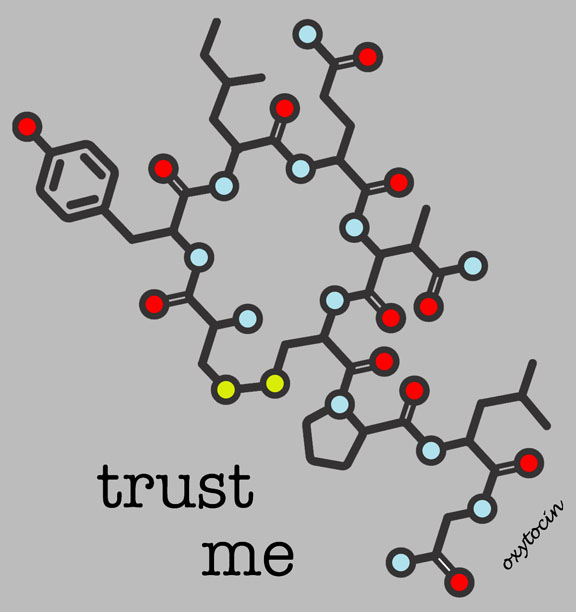
Sexual contact, especially when I results in orgasms, releases a hormone called oxytocin. According to Wikipedia, recent studies have begun to investigate oxytocin's role in various behaviors, including orgasm, pair bonding and maternal behaviors. For this reason, it is sometimes referred to as the "love hormone". 

This chemical found naturally in the brain during activities like hugs, sex and overall happy times. The chemical helps individuals feel closer and more intimate. This, in turn, helps solidify the bonds of romantic relationships. So, yeah. We’re saying that good sex brings people closer together. I know that’s a no-brainer, but we just thought it was cool there is a scientific basis for it.

So, don’t just have sex because it makes you feel good — have sex more because it makes you healthy.

Yours in Romance,
Drs. Chuck and JoAnn Bird

Drs. Chuck and Jo-Ann Bird and are Board Certified Clinical Sexologists and Relationship Counselors. They co-counsel couples together which offers a unique and balanced male/female perspective and a combined therapy/coaching approach to helping their clients with a variety of relationship and sexual issues/concerns. Due to our last name and work they do, they've become known as “The Love Birds”.

They have 16 + years of personal experience in a healthy, loving and successful relationship. We know how to solve problems and work through difficulties that couples may face on a daily basis. We know ways to keep relationships strong and healthy. We offer you tools and strategies that can make positive changes in your relationship. Find out more about Chuck. Alternatively, find out more about Jo-Ann. Also, follow them on Twitter and 'Like' them on Facebook.
You have read this article Chuck and Jo / marriage / sexual adventures / sexual health / Sexuality with the title Chuck and Jo. You can bookmark this page URL https://jadejurgensen.blogspot.com/2012/12/ladies-5-surprising-health-benefits-of.html. Thanks!

3 Reasons Cheating Is Not An Option


Infidelity is highly destructive. Trust is very difficult to gain back once you loose it. Whether you want to pretend to be the other woman or discuss polyamory as an alternative to cheating, Drs. Chuck and Jo feel strongly feel that communication is the way to save your marriage. Going behind someone's back and cheating is never the true answer. Websites like Ashley Madison, try to tell us that they aid couples who have problems. We strongly disagree. Here are three reasons why cheating is not an option.

* * *

Love isn’t dead, but every so often we read something that makes us think it might be comatose.

As the Internet dating world has exploded, with more than 40 million Americans having profiles on at least one of the key dating personal Websites, there is another kind of dating site that has popped up that just makes our blood boil.

Now, there are Websites that cater to married people who are seeking to have affairs with others. These sites guarantee anonymity and discretion and they create a feeding ground for people who have no problem with infidelity. What’s worse is that the founder of the most popular site — the Ashley Madison site with 13 million members around the world — is trying to defend the practice of having extramarital affairs as an aid to couples who are having marital problems.

To those of us who make a profession out of helping people solve their relationship issues, it’s like Charlie Sheen telling kids that drugs are good for you. So, if you have a moment, please allow us to dispel some of these inane arguments before they begin to take root and make some people believe that having an affair is just the shot in the arm their marriage needs.

#1 Cheating is not consensual 

Noel Biderman, the former lawyer and sports agent who founded Ashley Madison, has been making the interview rounds to promote his site. In one interview, he stated that non-monogamy has always been a part of traditional marriage, dating back to polygamists from the African tribes to the early Mormons. This is a false comparison, because that style of non-monogamy was consensual. Women who married men with multiple wives in those cultures knew they were marrying a man with multiple wives. They had full disclosure. An affair is an act of deception, which involves a married partner in a non-consensual act. They did not have a choice in their partner having another romantic partner — it happened without their knowledge of permission. So, that argument is a crock of ca-ca.

#2 It won't help keep your marriage or family together

In another interview, he tried to indicate that infidelity is good for marriage, because it’s all about sex. His contention is that someone who wants to have an affair because he or she is dissatisfied with their sex life would be selfish to forego the affair and just get a divorce. His idea is that marriages are often also about raising children and life partnerships, and sex is just one dimension. So, why get a divorce over the sex issue alone? Just have an affair and keep the family together.

There are so many things wrong with that argument, we barely know where to begin. First of all, an affair creates a breach of trust, which many families never survive. And if you don’t think an affair will never be revealed, ask Tiger Woods or Arnold Schwarzenegger how that concept worked out for them. Further, if the sex life is unfulfilling, that creates tension that children will see, making them unhappy, too. Moreover, there is another option other than having an affair or getting a divorce. It’s called working with your partner on increasing the quality of your marital sex life. I understand there are even counselors out there who can help them with that. We know a couple who seem pretty good at that, too.

#3 Cheating is not a wake-up call

The last argument he makes on the benefits of affairs is that they are actually good for a marriage because they can bring couples together. His viewpoint is that the affair acts like a wakeup call for a couple in crisis, and gives them the ability to come together to fix what’s wrong with their marriage.

What’s wrong with that marriage is that the trust has been broken, and repairing that trust now becomes the focal point of the work they have to do, not their sex life. In fact, many marital sex lives have a hard time recovering from an affair because the image of infidelity is very difficult for partners to overcome. It’s not that it can’t be done, but a couple that chooses instead to work honestly on fixing their sex life has far less work to do than a couple who must work on trust issues before sex can ever even happen again.

Our advice to married men and women who are contemplating an affair is to stop, take a breath, and examine what it would take to fix what’s wrong with your marriage first. If you can make it work, you should. If you try hard, but just can’t make it work, you should separate. But don’t sacrifice your integrity for a fling that will ultimately change your life for the worse.

Drs. Chuck and Jo-Ann Bird and are Board Certified Clinical Sexologists and Relationship Counselors. They co-counsel couples together which offers a unique and balanced male/female perspective and a combined therapy/coaching approach to helping their clients with a variety of relationship and sexual issues/concerns. Due to our last name and work they do, they've become known as “The Love Birds”.

They have 16 + years of personal experience in a healthy, loving and successful relationship. We know how to solve problems and work through difficulties that couples may face on a daily basis. We know ways to keep relationships strong and healthy. We offer you tools and strategies that can make positive changes in your relationship. Find out more about Chuck. Alternatively, find out more about Jo-Ann. Also, follow them on Twitter and 'Like' them on Facebook.
You have read this article cheating / Chuck and Jo / family / infidelity / marriage / polyamory / relationship problems / sex advice with the title Chuck and Jo. You can bookmark this page URL https://jadejurgensen.blogspot.com/2012/12/3-reasons-cheating-is-not-option.html. Thanks!

Why Do We Lie?


What's the opposite of a little white lie? Everyone fibs a little bit here and there. But why do we lie? Or outright not tell the truth? GetLusty's favorite therapist couple, Drs. Chuck and Jo Ann Bird, are here to talk about why we lie. 

* * *

We all do it. According to some scientific surveys — and some studies pioneered by psychologist Paul Ekman, an innovator in the study of the relationship between people’s emotions and their facial expressions — most people will tell an average of three lies in a typical 10-minute conversation.

We like to categorize them, so we can rationalize them. Little white lies, the ones we tell our parents when we don’t want to visit them or the ones we tell our bosses when we want to play hooky, are the most common ones. Sure, honey, I got the oil changed — then you get up early the next morning and get it done. These lies are every day lies, and whenever we tell them, we usually end up working a little harder than we need to in order to keep them under wraps.

Then there are the big lies, the nuclear lies, that we take more seriously. For couples, these lies are usually about affairs, past sexual partners or even medical conditions. These are the kinds of lies that can end a relationship. But why do we do it? Why is it that so many of us seem to have a reasonably casual relationship with the truth?

In our experience, the primary culprit seems to be self-esteem. We want our partners to have a positive image of us, so when we are challenged on something that might make us seem less than perfect — like forgetting to get the oil changed in the car — we lie about it to maintain a better image for ourselves. That’s why, many times, we won’t think twice about deceiving our partners, because we feel it is important to our relationships to maintain that facade. The greater the threat to our self-esteem, the greater the lies. The things we hide can become more dramatic — they could include the ex-girlfriend who was a drug addict or the former boyfriend who was abusive.

We also lie out of convenience, because we may not want to go 10 rounds over forgetting to get the oil changed. The purpose is to maintain order in our personal lives by avoiding smaller conflicts whose impact might be to simply ruin an evening. It also helps us avoid insults and discord, but the real issue is not the lie, but why there would be insults or discord as a result of simply telling the truth.

This is where we get into the yin and the yang of lies, because while we can all nod our heads and agree in concept that dishonesty is bad, we also have to recognize our own behaviors that may actually wind up training our partners to lie to us.

When faced with an unpleasant truth, do we react angrily? Worse, do we react violently? Is our automatic default position to head for negativity when an unpleasant truth is offered up by our partners?

If we do, we may very well be training our partner to lie to us, because we are not recognizing the concept that it takes courage to tell a partner an unpleasant truth and that courage should be rewarded. Instead of rewarding them, we may instead find ourselves punishing them by our negative reactions.

So before telling the small lies, ask yourself what you’re really getting in return for the effort. Would the truth really be that bad? Is the truth so horrible that it is worth the integrity of our relationships to hide it? And if the reaction from your partner is so negative that you can still justify lying, then perhaps the issue isn’t your lying, but rather, the fabric of your relationship itself.

Lies can be the termites of relationships because they eat away at them from the inside, quietly and barely detectable. Anger, however, is the dynamite of relationships that will always inevitably lead to a devastating explosion that can lead to irreparable damage.

So, look at your behavior, look at your partner’s behavior and understand why you lie before you do it. Maybe you don’t have to, because there is no crime in being human and flawed. We all are. The truth shouldn’t be so hard to take that we should allow the lies we use to cover it up to destroy the love we worked so hard to build. And for Pete’s sake, change the damn oil. You don’t want the car to break down on the way home from work, do you?

Speaking of being honest, have you 'Liked' GetLusty on Facebook yet? We're giving away a Tiani 2 to a lucky 'Liker' by December 1st. We're also on Pinterest and Tumblr, as well as Twitter @getlusty. What?! You're on those platforms and aren't in tune with our awesome content? Have amazing sex. Get lusty. 


Drs. Chuck and Jo-Ann Bird and are Board Certified Clinical Sexologists and Relationship Counselors. They co-counsel couples together which offers a unique and balanced male/female perspective and a combined therapy/coaching approach to helping their clients with a variety of relationship and sexual issues/concerns. Due to our last name and work they do, they've become known as “The Love Birds”. 

They have 16 + years of personal experience in a healthy, loving and successful relationship. We know how to solve problems and work through difficulties that couples may face on a daily basis. We know ways to keep relationships strong and healthy. We offer you tools and strategies that can make positive changes in your relationship. Find out more about Chuck. Alternatively, find out more about Jo-Ann. Also, follow them on Twitter and 'Like' them on Facebook.
You have read this article biology / Chuck and Jo / Communication / emotional / emotional baggage / emotions / lies / self esteem / self love with the title Chuck and Jo. You can bookmark this page URL https://jadejurgensen.blogspot.com/2012/11/why-do-we-lie.html. Thanks!

The Language of Polyamory


At GetLusty, we think monogamy is really sexy. But that's not to say there aren't other relationship options for couples. Take swinging or polyamory for example. But how do you describe polyamory? What is language do we use? Our favorite counseling couple, Chuck and Jo Ann Bird, are back to define some common phrases used to identify polyamorous couples or situations.

* * *

We often talk about the language of love, and how each couple needs to find their own language, so to speak, to communicate their love and devotion.

But what if there are more than two people in that relationship? We've been writing blogs about polyamory and the practice of consensual non-monogamy. We’ve been doing it primarily to parallel the debut of a new Showtime docu-series, Polyamory: Married and Dating, which explores alternative relationship structures like poly. Today, we’d like to discuss the language of poly love.

While it’s difficult to define the poly experience, as there are so many permutations of poly and each poly relationship has a dynamic all its own, we know there are a lot of words and terminologies out there that help frame the general poly experience. So, we thought we might be able to shed a little light on what poly is by explaining some of the words used by those who live it — the language of poly love.

Let’s start with some of the categories of poly relationships. Please understand that we aren’t trying to define the experience of poly — just provide a basic working knowledge of the basics of poly relationships. Below are just a few of the terms used to describe polyamory:

Responsible non-monogamy: Any relationship which is not sexually and/or emotionally exclusive by the explicit agreement and with the full knowledge of all the parties involved. Responsible non-monogamy can take several forms, the two most common of which are polyamory and swinging, and is distinct from cheating in that everyone involved knows about and agrees to the activity. Responsible non-monogamy often explicitly spells out the conditions under which it is permissible for one person to take on additional partners, and often includes some form of safer-sex agreement such as a condom contract as well.

Triad or vee: Colloquial A polyamorous relationship involving three people, in which one person is romantically or sexually involved with two partners who are not romantically or sexually involved with each other.

Quad: A polyamorous relationship involving four people, each of whom may or may not be sexually and emotionally involved with all the other members.

Group marriage: A relationship in which three or more people consider themselves married to one another; in the polyamory community, most often a relationship involving more than one man and more than one woman, who may live together, share finances, raise children together, and otherwise share those responsibilities normally associated with marriage. A group marriage is not recognized by and has no legal standing within most Western countries, but may have symbolic or have emotional value to the people involved. Many people who believe in group marriage may create civil contracts and other legally binding business arrangements which specify the type and extent of financial commitments within the marriage, or even form a legal corporation which defines the marriage.

Open marriage/relationship: Any marriage or committed relationship whose structures or arrangements permit one or both of the members involved to have outside sexual relationships, outside romantic relationships, or both. The term open marriage is a catchall for marriages which are not emotionally or sexually monogamous; and may include such activities as polyamory or swinging. The term “open marriage” is sometimes used as a synonym for polyamory, though this is not necessarily the case; some relationships may be open but not polyamorous (as in some swinging relationships which explicitly ban emotional entanglement with anyone outside the relationship), and some relationships may be polyamorous but not open (as in polyfidelitious relationships).

Polyfamily: Colloquial 1. A set of polyamorous people who live together and identify as part of the same family. 2. A polyamorous group whose members consider one another to be family, regardless of whether or not they share a home.

Polyfidelity: (Literally, poly many + fidelitas faithfulness) A romantic or sexual relationship which involves more than two people, but which does not permit the members of that relationship to seek additional partners outside the relationship, at least without the approval and consent of all the existing members. Some polyfidelitous relationships may have a mechanism which permits adding new members to the relationship with mutual agreement and consent of the existing members; others may not permit any new members under any circumstances.

These terms make up the basic framework of how many poly couples and moresomes refer to their relationships, but for those who are on the outside looking into poly for the first time, they are a unique window into a different way of thinking about relationships.

Drs. Chuck and Jo-Ann Bird and are Board Certified Clinical Sexologists and Relationship Counselors. They co-counsel couples together which offers a unique and balanced male/female perspective and a combined therapy/coaching approach to helping their clients with a variety of relationship and sexual issues/concerns. Due to our last name and work they do, they've become known as “The Love Birds”.

They have 16 + years of personal experience in a healthy, loving and successful relationship. We know how to solve problems and work through difficulties that couples may face on a daily basis. We know ways to keep relationships strong and healthy. We offer you tools and strategies that can make positive changes in your relationship. Find out more about Chuck. Alternatively, find out more about Jo-Ann. Also, follow them on Twitter and 'Like' them on Facebook.
You have read this article Chuck and Jo / commitment / Communication / polyamory / relationships / sexual adventures / sexual experience / sexual exploration / stronger relationship with the title Chuck and Jo. You can bookmark this page URL https://jadejurgensen.blogspot.com/2012/11/the-language-of-polyamory.html. Thanks!

Dispelling 3 Myths of the Sex Toys for Couples


We love sex toys. Sex toys can make a great addition to your couple. But are you afraid of sex toys, or know people who are? Those might say that sex toys shouldn't supplement their partner, or a variety of other excuses. Not true. And while it's #ToyWithMeTuesday and #SexToyTuesday on Twitter (@getlusty) and Google+, we thought now would be a great time to talk about sex toys. Our favorite counseling couple, Chuck and Jo Ann Bird, are here to talk about the biases of the sex toy-loving couple. And why we should keep an open mind about introducing sex toys to the bedroom.

* * *

We love going to Toys R Us and of the toy stores, because the displays are just amazingly vibrant — all the counters and walls are draped with these bright, blazing primary colors with packages designed to capture the eye and hold your attention.

For us, it’s also fun going to couples’ stores where adult toys are sold, because the displays are strikingly the same, awash in primary colors with a few more bright pinks, reds and purples — though the imagery is typically far from family friendly.

We’re enthused that adult toys have become more mainstream, but we also know there are a lot of people out there who are reluctant to consider the use of what used to be called “marital aids” in their bedroom repertoire. Many couples won’t even set foot in an adult video or toy store for fear of what the neighbors might say. Or maybe it's just a feeling that sex toys stores are only used by swingers or people obsessed with sex. Well, having been sexologists for nearly a decade, we have a little news for you — your neighbors have probably already been there, too.

Toys can be a healthy and welcome addition to a couple’s bedroom practices. Though we do understand the reasons why many people haven’t yet ventured behind the curtain to see what’s out there. So, we’ve assembled a few of the reasons we’ve heard over the years, with a slightly more enlightened view to counter them.

#1 Only dirty people use sex toys

There is a sense, you could even call it a mild prudishness that some couples have regarding sex toys. We attribute that to the compressed conflict that is sexuality in America. We use sex to sell cars, beer, website domains (thanks for the cheesecake, GoDaddy!) and even corn chips, but we are reluctant to address our own sexuality with the same openness.

Sex isn’t dirty, unless, of course, thinking of it as dirty is a turn-on for you. The truth is, sex is healthy, fun and downright necessary for a strong, long-term romantic relationship. Being ashamed of enjoying sex is like being ashamed of eating to us. It’s a normal, healthy human activity when performed by consenting adults. So, if sex isn’t dirty, neither are toys used to enhance the sexual experience. If you’ve never gone to an adult toy store, the initial imagery may be a little shocking, but if you go in with an open mind, you might actually find yourself having fun before you know it.

#2 Toys are only for masturbation

Over the years, as the sexual revolution took hold, women became empowered and chose to indulge their desires with or without a partner and stop being ashamed of their own sexuality. The sale and use of vibrators and other toys skyrocketed, and these toys became associated primarily with masturbation. But that is not their only function. In point of fact, many toys are far more effective and fun when they are wielded by a partner.

Now, you don’t really need to be a sexologist to figure that out. A little basic geometry is all you need. When you compare the range of angles a woman can reach using her own arm to the range of motion by a partner who is correctly positioned, it’s clear that a partner can do a lot more with those toys to help a woman receive the full benefit of whatever implements she may have in the toy bag. In fact, many toys on the market today are specifically designed to be used by a partner and are practically useless for masturbation. So, wipe away that old connotation of toys. Some games are most definitely more fun when played by two.

#3 Toys will replace me as a partner

As a tandem of the above concern, some partners are concerned that some toys may deliver sensations and experiences that just cannot be matched by simple human to human interaction, and they fear that the toys will replace them in bed. Granted, there are some toys that are very ingenuitive these days. From swivel-headed vibrators to the Sybian (think of a sit-down vibrator run by an outboard motor) to other greats. We completely understand how they can be a little intimidating to say the least.

There has been many a partner who has had to peel a woman off the ceiling after experiencing some of the more innovative devices on the market. But a toy cannot replace the sexual dynamic that two people can achieve together. The largest and most important sexual organ in the human body is the brain, and no matter the horsepower of the toy involved, they have yet to market anything with the imagination and creativity of the human mind. By joining your partner in the enjoyment of toys, you will be an inextricable part of their sexual lives and your role will be secure as long as you share your hearts and your imaginations together. So don’t be afraid.

Minds work best when they are open. And so do toys, once they are out of the box and in your bedroom.

Want to win a LELO Tiani 2? We're one giving one away by December 1st from SheVibe. 'Like' GetLusty on Facebook to enter!

Drs. Chuck and Jo-Ann Bird and are Board Certified Clinical Sexologists and Relationship Counselors. They co-counsel couples together which offers a unique and balanced male/female perspective and a combined therapy/coaching approach to helping their clients with a variety of relationship and sexual issues/concerns. Due to our last name and work they do, they've become known as “The Love Birds”.

They have 16 + years of personal experience in a healthy, loving and successful relationship. We know how to solve problems and work through difficulties that couples may face on a daily basis. We know ways to keep relationships strong and healthy. We offer you tools and strategies that can make positive changes in your relationship. Find out more about Chuck. Alternatively, find out more about Jo-Ann. Also, follow them on Twitter and 'Like' them on Facebook.
You have read this article better sex / Chuck and Jo / for couples / foreplay / sex / sexual adventures / toys with the title Chuck and Jo. You can bookmark this page URL https://jadejurgensen.blogspot.com/2012/11/dispelling-3-myths-of-sex-toys-for.html. Thanks!
Related Posts Plugin for WordPress, Blogger...