Showing posts with label Jacsman. Show all posts

10 Relationship Myths We Must "Whack Off"

Masturbation is a healthy and natural act of self-love. Stressed out? Masturbate! Feeling horny? Masturbate! We recommend both she and he masturbate. Since masturbation seems to be such a great way to release and improve on oneself, we thought it would be interesting to take the idea of masturbation to relationships. Jacsman, our favorite resident writer on long-term gay relationships, is here with advice on how to masturbate or "whack off" 10 relationship myths that keep us from growing closer and becoming more intimate with one another.

* * *

Masturbation as metaphor

Masturbation’s impulsive pleasure is one of the most significant joys that we bring with us into our relationships. As we took our pleasure into our own hands before — “polishing-the-pearl” during tea break, or “whacking-it-off” while waiting for the midday news report to commence — within coupledom, we have this agency in our partnership satisfaction. When that opportunity comes up during the day, we are intentional: we whack-it-off and then proceed with the rest of our occupations. What better sense of achievement (in under fifteen minutes) is there?

Masturbation is essential to sustaining the hearty sexual satisfaction we need in ourselves to experience satisfaction in our lovers. So I have paramount agency in my psychosexual satisfaction, being dependent on your lover for such satisfaction is problematic. It is potentially unhealthy for your relationship, since creating and making demands of your lover on a daily basis will empty them out in no time at all.

Prioritize your love 

Only if partners have their personal psychosexual satisfactions firmly in hand can the prime achievement of coupledom intimacy contribute to lovers’ experience of commitment. There are of course gradations of intimacy, and these are comparatively opaque in gay relationships, perhaps not from within our partnerships, but particularly from the outside looking in.

Though we do not need to follow heterosexual touchstones, to the larger part of the LGBTQ community the intimacy markers of engagement, marriage, and parenthood that characterise the bond between heterosexual couples are out of reach. Lacking such socio-culturally recognized status can be a source of dubiety in a gay partnership, becoming problematic when it interferes with the expression of feelings in the relationship.

The commitment that continued sexual and emotional involvement might imply can remain ambiguous indefinitely. Instead of just whacking-it-off, sitting down and doing it, talking honestly and transparently about our options/expectations and identifying/prioritizing our intimacy goals, we put this important communication off and continue getting by on assumption. In particular, gay men can be scared off by the intensity of prioritizing intimacy in this way. I suspect it is because we are, at first, virgins to the deeply gratifying pleasure resulting from taking hold of the opportunity to communicate quite so honestly and just whacking-it-off, getting it done, and then persisting in doing it. Committing to it until it is habit.

Hopefully, it's clear by this point why I am riding this masturbation metaphor. Masturbation in my committed sexual relationship serves to ensure my pleasure, distance, and time apart from my lover to see to my agency in my personal psychosexual satisfaction. Prioritizing and habituating honesty, transparency, and the celebration of our authentic love for each other serves to ensure our deepest pleasure, our sincerest intimacy, and most precious anniversaries together. You’ll come to cherish this pleasure too and in any moment during your day!

Relationship myths

What gives me great pleasure to tell you is that by whacking-off your intimacy and partnership priority, you'll come to understand the truth of your commitment and the true pleasure of your relationship, sexual and otherwise. Just as most couples, we buy into at least one of the common, and dare I say heterosexual socio-cultural myths, that mislead us in our most important interpersonal relationship. After all, LGBTQ souls, in wonderment, integrated the same fairy tales all people share in collective consciousness: Prince Charming, the Sleeping Beauty, Brave Huntsman, the Wicked Stepmother, and need I even mention Happily Ever After?

In "The Heart of Love," John F. Demartini notes that American President John F. Kennedy once pointed out, “The great enemy of truth is very often not the lie — deliberate, contrived, and dishonest — but the myth — persistent, persuasive, and unrealistic”. Most valid here, his surety for realistic living is to stop enjoying “the comfort of opinion without the discomfort of thought."

Going beyond fantasy to find true relationship fulfillment makes it necessary for us to prioritize our love’s truth and transparency; once a couple is in the habit of eliminating this, the joy of emancipation from false relationship myths climaxes in most intense relationship intimacy, sexually or otherwise.

The 10 relationship myths to "whack-off"

Rubbing out the following ten myths can, in some cases very ironically, be the most poignant bonding experiences for gay couples:

#1 My relationship makes me happy

Nope, you make you happy.

#2 My soulmate completes me

You are a complete human being in and of yourself.

#3 A “real” relationship will last forever 

All relationships are real and all relationships last as long as it is real for the lovers.

#4 Once we overcome choppy waters it will be smooth sailing 

Afraid not; storms come and go.

#5 A good relationship requires sacrifice 

Think again. Fulfilling coupledom requires communication and understanding, not martyrdom.

#6 Great sex happens only at the beginning of a relationship

Ecstatic sex can be honed from mutual understanding, trust, and intimacy, all grown over time.

#7 In the right relationship, I won’t have to work at it 

Commitment requires continued practice.

#8 In a relationship, I’ll never feel lonely 

Your feelings are involuntary, your lover cannot rescind them.

#9 Children can validate our commitment 

Your commitment is not your child’s/children’s responsibility.

#10 Opposites attract

You are not a couple of fridge magnets.

When to "Whack-it-off"

Once rid of the delusions, it becomes a matter of rhythm how you whack-it-off. It is your dialogical business as lovers to nurture mutual understanding, trust, and intimacy with each other. The 21st century lifestyle doesn’t allow for too many of these engagements, and while there is no magic number appropriate for every relationship, I consider one or two times per month as the bare-assed minimum to sustain relationship development. Calendaring might sound too businesslike, but calendaring is proactive prioritization of both your lover and your relationship. Setting a date with your partner assures a night of potency on the docket, more often than not in both cases: emotional and orgasmic. Everything leading up to the date is effectively edging, until, together, you whack-it-off.

Even the most time strapped, communicatively challenged partners should never miss mandatory (birthday, anniversary, etc.) opportunities to prioritize their love and consideration for each other, when any excuse less than anaphylactic shock won't exempt a partner from duty to commitment and love. Also, create your practicable fairy tale by inventing your own "touchstone" moments.

In a future GetLusty post, I will arouse your imagination on how to recognize and lovingly carve out such mandatory opportunities to whittle on your intimacy communication. The best place to start however, is to get lusty for it and just whack-it-off. Just do it. Get Lusty endeavours to get couples there, whether straight or gay.

Develop and understand your relationship better; again, whether a gay or straight couple, turn the lust up for one another and subscribe to GetLusty. GetLusty guides us towards intimate understanding of our love for each other as we all aspire to nurture the kind of commitment that can sustain our souls. I’ll do near anything to help you get your lust on for your lover, and share the joy and learning from it with the lovers of the world.

Do It well, do It safe.
Jacsman


He studies and writes about men and masculinity in MSM relationships, and gay couples getting lusty is JacoPhillip’s cup of tea. Our resident advisor on gay long-term relationships, JacoPhillip Crous is also known as Jacsman. A sex life educator, Jacsman consults in-person, on Skype, and by telephonic private sessions with couples and solo clients on ecstatic and intimate psycho-sexual lifestyle and development.

Jacsman promotes male2male dialogue that furthers understanding of masculine sexuality and MSM relationships. A research psychologist, he explores and investigates male psycho-sexual self-development phenomena, behaviours, experiences and knowledgeability. Find out more about JacoPhillip at: http://about.me/Jacsman.
You have read this article Communication / confidence / emotional / empowerment / for couples / for men / for women / gay / intimacy / Jacsman / masturbation / monogamy / stronger relationship with the title Jacsman. You can bookmark this page URL https://jadejurgensen.blogspot.com/2012/12/10-relationship-myths-we-must-off.html. Thanks!

Are Gay Relationships Different?


Relationships, everyone can experience similar relationship issues. It doesn't matter if you're in a heterosexual relationship or a homosexual relationship, we are all human and we all deal with similar emotional issues. Here at GetLusty, we have discussed relationship issues like lying and cheating, using non-violent communication and talked about sex during marriage. We have even decoded the mysteries and stereotypes surrounding lesbian relationships. Here at GetLusty, we are trying to be more inclusive of all forms of sexual relationships. In this article, GetLusty's JacoPhillip Crous (Jacsman) gives us an insightful look into gay relationships and asks an important question - are gay relationships different from straight relationships?

* * *

“Nothing in the world is more dangerous than sincere ignorance and conscientious stupidity” – Martin Luther King, Jr.

Assumption. I have bandied the word about before. It means to accept something as being true without any proof thereof. It seems to be one of the human condition’s most dominant traits. We love to assume things about others, and in many instances we do so arbitrarily and without real cause. We assume what people are thinking, or we assume what motivates their actions or words, and in some more surreal cases we assume what underlies their very feelings.

Many of us are good at assumption, especially if motivated by positive thought; “he cut me those roses from the garden, not because there were too many flowers on the bush, but because he loves me”. Unfortunately, not all assumptions are valid, and most of us haven’t reigned in this wildfire trait; “she always leaves her stockings and panties on the floor for me to pick up, surely she disrespects me, so clearly she doesn’t love me”. I did say wildfire.

The threat of assumption is twofold. It is reductionist; firstly, reducing people to an exaggerated inanimate trait or behaviour. Secondly, it germinates grand, often erroneous mythologies about people, lumping people, social groups and even cultures into stereotypes. These stereotypes then get woven into extravagant myths that too many people, cultures and societies allow to take on normative prevalence, whereby they weave biases and prejudices into interpersonal relationships – wildfire.

You and I live within a world where many of these myths do terrible harm. As with most out-groups or minorities, one trait is blown out of proportion, so that it is forgotten that they are basically human beings, trying to make a life for themselves in the same world, with the same legal and socio-cultural rights and status afforded to all.

Although the marriage equality debate in the United States of America is saturated by myths and legends, much is also clear to me. The issue of what civil rights and status to accord committed lesbian and gay couples will vex the USA (and many other countries for that matter) for years to come. Whilst South Africa was one of the first five countries in the world to constitutionally entrench equal rights for gay and lesbian members of society, it was not until recently that gay men and women have enjoyed full commitment equality in South Africa. This right was also hard fought, and was a direct result of court action by interested parties, as opposed to a self-motivated political or social adaption of equal rights. Therefore, socio-cultural as well as legal change is considered necessary to ensure this equality to prosper. Even still there are elements within that society that oppose such equality, believing it to be something outside of experience of same sex couples.

Notwithstanding this coequality provision in South African marriage law (2006), in too many ways socio-cultural regard is still plagued by myths and legends despite what legislation has attempted to provide. So, in the USA, although legislatures and courts will be involved in securing such equality, the role of civic awareness programs and even private initiatives cannot be understated. These will play the pivotal role in emancipation of gay men and women, much as it still does in South Africa.

For this reason it is of the utmost importance that we collectively and individually halt erroneous myths and deceptive rhetoric from spreading prejudicial and discriminatory cloud in 21st century civilisation. In forthcoming posts I will consider the following 6 truths revealed from considering the below myths about gay commitment, providing my own experience shared by gay men and women in committed relationships, living real lives out in the real world:

#1 Gay relationships don't last

I consider this one of the more tricky myths to dispel – scientifically speaking. Scarce research has been done into the longevity of committed gay partnerships and marriage. Here one must also understand that marriage is but one form of committed relationship, and as society itself has evolved, so has the nature of relationships. Many societies now recognise civil unions, and co-habitation arrangements as equally valid forms of long term relationships. The fact that the research that has been done in regards to the long term sustainability of such relationships is rather culture exclusive – meaning predominantly Western (European and Canadian data) – making the myth that gay relationships aren’t as real or long-lasting as heterosexual ones creates a real concern for those parents concerned about their gay sons and daughters. Furthermore, it perpetuates the gay-life-dissatisfaction and promiscuity myths that seem to pervade the blogosphere. Of real concern is that these myths and unfounded allegations are often used by some to undermine the validity of gay relationships.

Available research has found these myths to be untrue. Long-term studies of gay couples indicate that their commitment is just as enduring as straight pairings. "There is considerable evidence that both lesbians and gay men want to be in strong, committed relationships [and] are successful in creating these partnerships, despite difficulties created by social prejudice, stigma, and the lack of legal recognition for same-sex relationships in most parts of the U.S.," said UCLA psychologist Anne Peplau, co-author of a book chapter on the subject published in the 2007 Annual Review of Psychology.

Emeritus professor of psychology at University of Washington, John Gottman and his colleagues collected a data set spanning 12 years. About 20 % of the participating homosexual couples had separated in the dozen years. A rate that, projected over a 40-year period, is slightly lower than first marriage-divorce rates among heterosexual couples over the same time span. In the study published in the Journal of Homosexuality 2003, Gottman said:

"The overall implication of this research is that we have to shake off all of the stereotypes of homosexual relationships, and have more respect for them as committed relationships."

Most endearing to me about the knowledge gained from this research is its indications that gay couples tend to be better at resolving conflicts and encouraging positive emotions.

It should also be said, that like their straight counterparts, gay relationships suffer the same hardships endemic to most relationships. Finance, abandonment, lack of communication, to mention but a few of those factors, are not unique to straight couples, and have as much of an impact on gay couples.

#2 Gay parents aren't as good at being parents

Many detractors of gay commitment and gay parenting charge that same-sex parenting does some harm to kids. To grow up to be a healthy adult (ostensibly straight), a child needs both a father and a mother. Research, however, shows that children of gay parents tend to fare just fine.

Two studies were described in a literature review paper published in February 2010 in the Journal of Marriage and Family. Recently 90 teens, half living with female same-sex couples and the others with heterosexual couples, showed standard correlation. Teen boys in same-sex households had grade point averages of about 2.9, compared with 2.65 for their counterparts in heterosexual homes. Teen girls showed similar results, with a 2.8 for same-sex households and 2.9 for girls in heterosexual families.

Timothy Biblarz, a sociologist at the University of Southern California, found that kids with two moms or two dads were no more likely than their counterparts in "traditional" homes to engage in delinquent activities, such as damaging others’ property, shoplifting and getting into fights.

"The bottom line is that the science shows that children raised by two same-gender parents do as well on average as children raised by two different-gender parents . . . This is obviously inconsistent with the widespread claim that children must be raised by a mother and a father to do well," Biblarz said.

This question has also been addressed in many public hearings within the United States, and who can forget the heartfelt and impassioned speech of young Zach Wahls speaking in defence of his two lesbian mothers. His closing statement made for a powerful admonishment of this myth: “the sexual orientation of my parents has had zero effect on the content of my character”.

#3 Homosexuals never marry and they fear commitment

Can our assumptive nature be any more derivative? Homosexuals never marry, therefore, people who never marry are homosexual. For too many people it then follows that people who marry and have children, are presumed to be heterosexual.

Many homosexual people do marry (when allowed to do so) and have children. Likewise, many people who never marry are strictly heterosexual. With the significant effort we are investing, as a global community, in perusing coequality for all couples to have access to marriage, odds are that this myth will not matter as much. It is however, a perverse irony that historically the argument was made that same sex couples are not interested in the stability of marriage, and equally are not concerned with the raising of children.

For this reason they were considered less than their heterosexual counterparts, who were assumed instinctually interested in these things. Despite being an overstated generalisation both in terms of gay and straight relations, many gay and lesbian couples are actively fighting for the right to marry and raise children, with the exact opposite argument now being thrust upon them. More specifically, that same-sex marriages are not the same as heterosexual ones (which would somehow be undermined by allowing same sex marriage), and these relationships pose some (unproven) risk to children. Much like eating your cake and having it, and one cannot help but ask whether the true motivations behind these unproven, and dare I say destructive positions, is not merely prejudice with a good dose of ignorance?

#4 Recently the number of “queer relationships” has increased tremendously

There is no truth in this regard. The incidence of homosexuality has remained fairly constant, at least in the USA, since Alfred Kinsey’s comprehensive studies (1948, 1953) to more recent investigations done in the 1980s.

The visibility of gay and lesbian members of society, who have come out of the shadows and fought for the right to participate alongside the rest of society might be at the root of this false belief.

Our homosexual communities and gay relationships are far more visible now than they were previously, where in the past gay men and women were subject to crass abuse, imprisonment and intense judgment from society. With the gay liberation movement, more homosexuals as well as heterosexuals stopped keeping their “queer” preferences secret. Added to which, the de-criminalization of gay sexual activity and relationships, have gone a long way in providing the space for gay men and women to be far more outspoken than they have in the past. Of course many more gay men and women live “out of the closet” today. Yet in many country’s where such an evolution has not occurred, these men and women remain silent participants in that society, hidden from persecution and judgement, suffering oppression and self-denial .

#5 You can always tell relationship and sexual dynamics by the way partners each look or act

Gay couples surely imitate the status quo, and the assumption by many is that there needs be a “man” and a "woman” in committed sexual, emotional, and partnership. Gender polarity is not necessary for relationship success; and no, men who act in a feminine manner must be “the wife”, and masculine women with short haircuts and who don’t wear dresses, must be “the one who wears the pants in the house” 
is not the truth by far.

These stereotypes only apply to about 15% of male homosexual and 5% of lesbian relationships, and many would not be comfortable with these labels (“woman”, “butch” or “feminine”). Such stereotyping confuses sexual orientation (whether you are attracted to the same or opposite sex as sexual partners) with gender roles (exhibiting masculine or feminine behaviour).

We must be mindful that as the vast majority of gay relationships do not realistically live out these stereotypes. Except for their actual sexual activity or admitting their sexual preferences, there is no accurate way to judge someone's sexual orientation.

#6 If you are not heterosexual, you are homosexual

Rather finding people as polarised heterosexual or homosexual, Alfred Kinsey’s comprehensive studies (1948, 1953) found that many people have both heterosexual and homosexual feelings to varying degrees. Kinsey saw sexual orientation on a continuum. Ultimately Kinsey found that 50% of men and 28% of women had same-sex sexual experiences. Almost all of these people developed a heterosexual predilection. People become homosexual because they were sexually abused as children or there was a deficiency in sex-role modelling by their parents.

Many anti-gay rights proponents claim that homosexuality is a mental disorder caused by some psychological trauma or aberration in childhood. This argument is used to counter the common observation that no one, gay or straight, consciously chooses his or her sexual orientation. Joseph Nicolosi, a founder of the National Association for Research and Therapy of Homosexuality, said in 2009 that "if you traumatize a child in a particular way, you will create a homosexual condition."

Repeatedly Nicolosi has said, "Fathers, if you don't hug your sons, some other man will." A particularly nasty side effect of this argument is the demonization of parents of gay men and lesbians. They are made to wonder if they failed to protect a child against sexual abuse, or failed as role models in some important way. Many a gay child will attest to there parents reacting in this way to news of their sexual orientation. “What did I do to fail you are a parent?”, or “what did I do to make you this way?” are often said in response to the child “coming out” to them.

The truth is that to date no scientifically sound study has been conducted that has linked sexual orientation or identity with parental role-modelling or childhood sexual abuse.

The American Psychiatric Association noted in a 2000 fact sheet on gay, lesbian and bisexual issues that "no specific psychosocial or family dynamic cause for homosexuality has been identified, including histories of childhood sexual abuse." Gay people are more prone to mental instability and to abuse drugs and alcohol. It is true that LGBT people suffer higher rates of anxiety, depression, and depression-related illnesses and behaviours like alcohol and drug abuse than the general population. But studies done during the past 15 years have determined that it is the stress of being a member of a minority group in an often-hostile society — and not LGBT identity itself — that accounts for the higher levels of mental illness and drug use.

It has been my observation that gay men and lesbians that are in committed relationships experience significantly less psychic strain than single gay men and lesbians. I will further discuss this, and the foregoing seven realities of gay coupling and commitment in future GetLusty posts.

It would bring me great pleasure to dialogue with you on any sex-life issue you, or your relationship is facing. My goal here is to help our readers get to have the most lusty, sexy, satisfying, healthy relationship by offering tools for understanding your commitment to a healthyand sustainable relationship. Always my last word of advice...in all sexual and emotional endeavours.

Do It well; do It safe,
Jacsman

He studies and writes about men and masculinity in MSM relationships, and gay couples getting lusty is JacoPhillip’s cup of tea. Our resident advisor on gay long-term relationships, JacoPhillip Crous is also known as Jacsman. A sex life educator, Jacsman consults in-person, on Skype, and by telephonic private sessions with couples and solo clients on ecstatic and intimate psycho-sexual lifestyle and development.

Jacsman promotes male2male dialogue that furthers understanding of masculine sexuality and MSM relationships. A research psychologist, he explores and investigates male psycho-sexual self-development phenomena, behaviours, experiences and knowledgeability. Find out more about JacoPhillip at: http://about.me/Jacsman.
You have read this article heterosexuality / homosexuality / Jacsman / relationships with the title Jacsman. You can bookmark this page URL https://jadejurgensen.blogspot.com/2012/12/are-gay-relationships-different.html. Thanks!

Why Talk About Commitment


We always learn from JacoPhillip Crous, our resident advisor on gay long-term relationships. He is full of so much wisdom and advice when it comes to bettering our own long-term relationships through communication. Getting to know your partner's wants, needs and desires through effective communication and feedback improves our relationships. Communication and commitment are extremely important and having a consensual, committed relationship will not only lead to a healthier love life but you will also have a firm foundation to let your relationship grow.

* * *

Actively communicate

Communication is the buzz word for most relationship counseling, whether it comes from your BFF or your very expensive couples therapist.  The language of love, sex, and relationships is always changing.  It is important to recognize that "communication" is not just a catch all word for making your relationship better. Communication is a means for people to address wants, needs and issues so we can be happier in our exploration of our selves.

Often times, one or both halves of a couple will decide they want to experience something new or to try something different. The problem is, what “new” or “different” means to one person may bear little or no resemblance to what it means to the next.  Even if you have developed your own couple’s-telepathy, lovers still need to actively communicate dialogue with feedback and explanation of meaning or emotion.

For example, when one person gets around to using the word "new" in a relationship, to the speaker “new” means something that they have probably thought of for a while, but haven't had the ability to express it to the other person.  The listener or recipient of the message may find the actual idea “new” because, until now they have probably not thought of it at all before or the couple hasn't spoken of the thought previously. For another couple, "new" can mean something that both the speaker and recipient have been thinking about, but neither partner had the means to articulate and initiate the conversation.  My advice is to explore your foundations of communication and commitment before adding the "new" or "different."

Understand where you and your partner are coming from

In a committed relationship, there are many aspects of communication that have to be addressed so that both partners can understand each other.  If either party doesn't understand their own needs, wants, and desires, holding a conversation about adding a new idea will be difficult.  Either party may not realize what they are consenting to or what is expected of them.  To use a metaphor, you have a very detailed treasure map for the island, but if you don't know where the island is located you won't get very far.  Understanding where both you and your partner are coming from is essential in communicating your ideas to each other.

So how do you figure out what you want, what you may get, what is wanted of you, and what you would consent to give?  Let's try to acknowledge that some of the psychobabble and self help literature doesn't give you straight up answers, again it gets lumped in with the word communication as if we inherently understand what that entails.

What is Alpha communication?

Alpha communication is a trusting communication motivated by care for one another. This is based on both partners being honest, real, and transparent with one another about your needs, wants, and desires to benefit your consensual commitment to each other. For some couples, this conversation is the proverbial deal breaker for the relationship; to what depths/heights of commitment are the two of you willing to consent to now. The relationship doesn’t need to accommodate any specific changes in the moment, but there must be consensus on the commitment capacity of your relationship.  Then you can start to add new strategies and approaches to be able to understand what each other is trying to say.

What are Alpha topics?

Consent to what are “Alpha-topics” for your particular partnership needs to be acknowledged and communicated clearly, here in the Alpha-conversation. This consent to your commitment is necessary if consensus is to be achieved in future communication on how such topics can be addressed and made practicable.  Consider this a framework for understanding the other person and where they are coming from.  It is like a foundation to a house being built.  Many of you probably have already spoken about some of these topics: ideas and feelings on marriage, children, religion, respect, lifestyle, and finances among other fundamental values.  Once you have expressed your concepts on these points and your belief structures, your partnership has a basis for understanding how to evolve and change through active communication.

If you’re not talking about the things that actually make partnership consensus and consensual commitment, you may as well consign your relationship commitment to an individual monologue.  Your message recipient will not understand nor be willing to actively listen.  There are an infinite number of websites and self help books out there that will tell you communication is key, but very few that explain how to get there.  Starting with these main ideologies and determining what "language" you and your partner are speaking will help guide the conversation and communication actively.

Relationships that dissolve supposedly because of “unrealistic expectations” in regards to Alpha topics such as the ones mentioned above, actually may have come apart anyway.  Getting real – honest and transparent – about consensual and commitment expectations in Alpha conversations may only accelerate dissolution because any impurities (dishonesty and nondisclosure) and flaws (insecurity and lack of transparency) that might be allowed to persist in your relationship, will only become more pronounced as you add more misunderstanding to the mix by adding secondary or new conversations.

For many other couples, Alpha conversation will only deepen and enrich the consensual relationship commitment you already have and enjoy. I am not saying saying it will always be smooth going, but knowing what you each want to maintain and what to develop in your relationship as you move forward will give you solid ground to stand on when things feel shaky.  Even a little bit of time spent on self-examination here will help down the road when challenges come up. By confirming a consensual partnership foundation in Alpha conversation, and making sure you’re on the same page about the relationship, you’ll have smoother Beta (secondary) conversations leading to a more satisfying partnership and easier communication.

Regardless of your partnership, gay/straight, open/poly/monogamous, various power dynamic structures, clarifying your message and giving feedback to your partner based on an understanding of their communication style and language will assist in a healthier relationship.  We can all empower ourselves with the variety of information on communication via the Internet or knowledgeable professionals. But being able to assimilate and use that information appropriately is the difference between successful communication and eventually giving up and walking out the door.

Relationship example

Malcolm, 28, and Dean, 29, are a couple that has been in a relationship for the past three years.  Dean was committed to Malcolm yet felt that the traditional/straight model of monogamy as the marker for loyalty, commitment and fidelity didn’t match his experience. He wanted to be a cock-tease; able to flirt under his lover’s supervision, and sometimes, with the consent of Malcolm, bring such spoils home for both of them to share in.

Malcolm was somewhat open to this idea, but worried that Dean wasn’t really committed to him and was just using something “new” and “different” as a way to avoid commitment. Before encouraging them to explore “new” and “different” with anyone else, I spent some months with them helping the couple sort out how they felt about their own relationship as it stood, and what it meant in the life of each man in the here and now.  Forming a foundation for consensual commitment and understanding helped confirm the couple's relationship and gave them a basis for making the additional changes for a happier, healthier commitment to each other.

Each partner in Malcolm and Dean's relationship had to determine what the term "commitment" meant to himself.  Both examined how committed to the other he was and what level of commitment each had for the other.  They determined if they were in the "pre-commitment" stage of the conversation where they determined if they were in a long-term relationship, somewhere in the middle, or had something else completely.  To be on the same page to communicate effectively, Malcolm and Dean examined their own beliefs in the Alpha-conversation and had to be honest about what their need, wants, and desires were.

Ask yourself questions


Alpha conversation opens up a steady flow of considerations for you and your lover.  Communication starts with self-examination and understanding of where we are coming from and where our partners are coming from.  Some other questions we should ask ourselves when looking for effective communication in a relationship are:  What else is going on in our life? Do you have space and time to devote to exploring consensual commitment and sexual development in your relationship? How much time and energy are we willing to put into this exploration? How will we handle different levels of resources, energy, attention, etc. practicably, as a couple?

Do you have the self-knowledge and communication skills to keep your existing relationship (the romance and the friendship) healthy and thriving? Can you anticipate some of the challenges that might emerge ahead of time? Where do you see room for yourself to grow?

Do I know what makes my partner feel happy, secure and loved? Am I willing to put extra attention on nurturing my existing relationship even as I make my way through the world? Where do I want to be sure to put that extra attention? Do I know what makes me feel happy, secure and loved? Am I willing to put extra effort into self-care and self-discovery? What opportunities do I see for myself here?

This understanding of what a good foundation for communication of our commitment to our relationships, will be further explored in a later GetLusty article.  My goal here is to help our readers get the most lust, sexy, satisfying, healthy relationship by offering tools for understanding each other and learning to be on the same page in our communications.  My last word of advice...in all of our endeavors, do It well; do It safe. And GetLusty!

He studies and writes about men and masculinity in MSM relationships, and gay couples getting lusty is JacoPhillip’s cup of tea. Our resident advisor on gay long-term relationships, JacoPhillip Crous is also known as Jacsman. A sex life educator, Jacsman consults in-person, on Skype, and by telephonic private sessions with couples and solo clients on ecstatic and intimate psycho-sexual lifestyle and development.

Jacsman promotes male2male dialogue that furthers understanding of masculine sexuality and MSM relationships. A research psychologist, he explores and investigates male psycho-sexual self-development phenomena, behaviours, experiences and knowledgeability. Find out more about JacoPhillip at: http://about.me/Jacsman.
You have read this article Communication / consent / intimacy / Jacsman / LTR / stronger relationship with the title Jacsman. You can bookmark this page URL https://jadejurgensen.blogspot.com/2012/11/why-talk-about-commitment.html. Thanks!

Does Your Relationship Have Sexual Versatility?


There are many things that heterosexual couples can learn from gay couples. This includes the "top" and "bottom" effect, where you can switch roles. As with couples, Jacsman explores in-depth the affect of sexual versatility on your relationships. How can you learn to be a better couple through sexual versatility? Read on!

* * *

At GetLusty for Couples, we strive to provide all couples with a stronger sense of partnered power and promote the sexual possibilities that can be developed in coupledom. If there’s anything we want you to get from reading GetLusty, it’s a sense that there are infinite possibilities in coupledom. By acknowledging and honouring your personal limits, you can get to explore the boundless territory that lies within your partnership. Sound paradoxical? In partnership, by building on a foundation of personal safety and mutual concern, a couple constructs a pathway that can carry them ever farther forward in love, and toward each other in lustful intimacy.

Conscientious partnership can be a safe space for personal exploration, growth and healing for “top” and “bottom” alike. Defining what we actually mean by terms like “top” and “bottom” gets very tricky. The power play of these two terms are Daedalian. For the purposes of this article I am going to define “bottom” as someone who has the ability to eroticise or otherwise enjoy the sensations and emotions that accompany being submissive and/or being penetrated during sex play. To keep it simple, I’ll define “bottoming” as “acting like a bottom”. . . or “submissive”, because not everyone who bottoms is a bottom. Likewise, a “top” can eroticise or otherwise enjoy penetrating and/or dominating their partner during sexual play, and not everyone who “acts like a top” . . . or “dominant” is categorically a top.

Personally, I remember the realisation that made it possible for me to begin exploring my bottom space. For the first five or so years of my sexual play, I’d been exclusively top. I was conscious that part of what I got from topping was the satisfaction of being a giver, tutor and healer for my bottom in any given sexual play – an intense sense of nurturing and mutual discovery and growth which was instilled in me by my first sexual relationship. The first time I bottomed I felt great trepidation. However, afterwards, we were lying in each other’s arms, and he drifted off to sleep. I lay there admiring his open, vulnerable face, and I realised that I was just as much a giver, tutor and healer (also beneficiary, tutee and healed) when I bottomed as when I topped. I was transformed by my versatility.

In partnership, the couple is a crucible. A crucible is the container used by a metal worker to melt together ores – “a receptacle for strong metals and high heat, transforming two lesser things into a greater thing, the alchemist’s cauldron where lead becomes gold”. In the security and safety of coupledom, with the heat of loving, lustful spirit and sex, your partner’s energy combines together with your own energy, and turns into something stronger, brighter, and more powerful than either of you could generate alone.

Partnership is the locus for the creation of a newly minted reality. A reality with all the power and wisdom that a top and bottom can together bring to the spirit of their unique coupledom. The thing is, committing to a partnership is a relationship. And relating is something that happens in real time. It’s a process, a co-exploration, and a way of being with each other as stuff comes up. Self-defining, like, “I’m a top” or “I’m a bottom”, as though it were a favourite colour, and sticking to it for life, makes no sense. Experiencing life together with a partner is an alchemical process. You both develop. You grow. You become more, together. Your relationship necessarily needs to develop and grow accordingly or it will bust apart. What does that process look like? Conversations. Check-ins. Trying things and seeing how it goes. Being willing to back-track. Reassurance. More conversations.

Sounds like a lot of work, right? It is. There’s a reason your mother told you commitment is not for the faint hearted. The good news? This process, done with patience, mutual support and love, leads to incredible intimacy, and ultimately, can lead to satisfaction reaching way beyond just your relationship. Every couple’s alchemical story is as unique as the individuals in the partnership, and each couple’s definition of “success” is different.

One lesbian couple I worked with had been together since their late teens. They were madly in love, adopted 2 kids, established careers, and could boast 14 years of commitment under their belts. They had absolutely no intention of opening their relationship up. Yet, both felt there were sexual experiences, “in the other role” they had come to need for their personal sense of fulfillment. Each, though, feared that their partner would be unable to consummate. Through our work together, we found “versatile” space for each partner to explore her sexuality in ways that felt safe emotionally and physically within their relationship.

Another couple, Mark* and Thomas*, came to me because they had hit an unexpected snag. Thomas had wanted to open up to expand his repertoire as a “top” by exploring his bisexuality and was interested in forming a long-term relationship with a woman, without taking anything away from his life-partner. Mark was supportive of this idea, and they decided to keep the playing field even, and they would both try dating to see what it was like. Neither of them was prepared when Thomas was blindsided with mind-numbing jealousy when Mark was bottoming for another man.

It turned out that they had different motivations. Thomas wanted a female bottom who could be a potential addition to their relationship, whereas Mark wanted a sexy friend who was outside of the relationship that he could top. In Mark’s desire to explore topping for himself, autonomously and as an “extra” outside of their relationship, Thomas perceived his beloved as wanting him out of the way. But in his view, Mark wanted to keep stable the sexual dynamic he had with his lover Thomas, considering it as central and special to their relationship. Once they both understood their different motivations, they were able to make decisions about who and how to pursue their desires to explore topping in a way that had them both feel loved and cared for.

A third couple came to me when they had just moved to “the big city”. These two men, Dale* gay and Harry* bisexual, had been together for three years. Harry was the top in their relationship, but really enjoyed bottoming for women. They had dabbled in the swinging scene in their previous town, but the scene there was very small and they both felt vulnerable to judgment and drama there. Despite being supportive of each other, neither man felt comfortable doing too much outside of their relationship. Now that they were in a bigger city, they wanted help in finding a gay-oriented scene where Harry wouldn’t be criticized if he also dated or hooked up with women to bottom for them. Through our work together, we were able to process their different fears of judgment and they found a community of poly-friendly, sex-positive friends who were supportive of both men’s sexual expressions and their committed relationship.

I’ve had the pleasure of knowing many individuals and couples like this. Each story is unique, but there are three things that consistently contribute to couples successfully developing versatility in their sexual relationships.

• Both partners have the same understanding of their own relationship. When you talk to one partner, they will say the same things about the relationship as the other partner does. It appears to matter less “what page you’re on” than “that you’re on the same page”.

• They are doing this as a team. Even if one person is more “into it” than the other, no one is pressuring the other to go along with it. Couples who develop versatility as a team are listening to one another and paying attention to what works for both of them. They are looking for win/win solutions to sexual role challenges. They listen to each other’s fears and concerns. They are committed to finding ways to put both of their needs and desires on the table, collaboratively.

• They treat one another with kindness and respect. This is perhaps the most important requirement for success in any relationship. Even when one partner says something that is difficult for the other partner to hear, they listen with compassion and are gentle with each other’s vulnerabilities.

You might notice that these three things are helpful, and perhaps necessary, for relationships of any kind, and that is true. As a bottom you are a top-maker and vice versa. You also give your top the all-important permission to not be a top – to express the fears, concerns and vulnerabilities that we all, as human beings, must have. We need each other to be who we are. We need to explore and develop ourselves, as tops, and as bottoms, to get the acceptance we crave for our sexiest, lustiest needs and wants. We need each other to become the most that we can possibly be. Even with all those wonderful intentions, the most loving, happy couple might still stumble. GetLusty for Couples endeavours to get couples there, whether straight or gay. Develop and understand your relationship better; be a gay couple to turn the lust up for one another.

In a future GetLusty post, I will provide practical conversation guides to help you towards falling more deeply in love with each other as you create the kind of relationship most people only dream of. I’ll do near well anything to help you get your lust on for your lover, and share the joy and learning from it with the lovers of the world.

Do It well; do It safe.

Jacsman
*For ethical privacy all person names are given as nom de guerre.


He studies and writes about men and masculinity in MSM relationships, and gay couples getting lusty is JacoPhillip’s cup of tea. Our resident advisor on gay long-term relationships, JacoPhillip Crous is also known as Jacsman. A sex life educator, Jacsman consults in-person, on Skype, and by telephonic private sessions with couples and solo clients on ecstatic and intimate psycho-sexual lifestyle and development.

Jacsman promotes male2male dialogue that furthers understanding of masculine sexuality and MSM relationships. A research psychologist, he explores and investigates male psycho-sexual self-development phenomena, behaviours, experiences and knowledgeability. Find out more about JacoPhillip at: http://about.me/Jacsman.
You have read this article better sex / for couples / for men / for women / gay / intimacy / Jacsman / love / sexy / stronger relationship with the title Jacsman. You can bookmark this page URL https://jadejurgensen.blogspot.com/2012/10/does-your-relationship-have-sexual.html. Thanks!

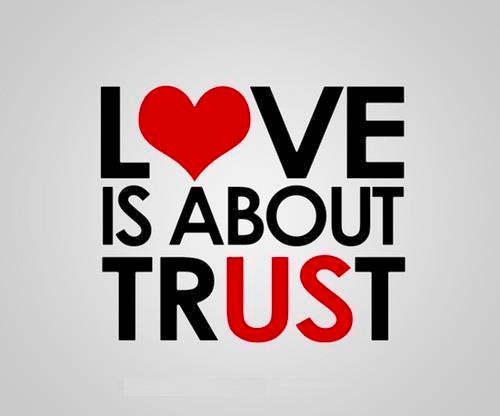
Why Deeper Love Is About Trust

In his last post, JacoPhillip Crous wrote about learning to love after the fall. In his next heartfelt piece, JacoPhillip shares his personal experiences on when he engaged in the coupling guidance process with his partner and "husband" of over eight years. JacoPhillip Crous reports.

* * *

Understanding each other's language 

“I finally discovered that my greatest fear is not being alone; it’s being vulnerable.”

When choosing coupling committedly with someone who is also your lover, therein, you are equal, adult partners; you love one another. Psychologist William James believed that possibly the deepest human need is the need to feel appreciated – knowing that you are valuable (precious, if you like) to your lover.

“We struggled for years trying to love each other more, or better, or something, but . . .” said Tony*, in a committed relationship of eight years with Allen* who concludes Tony’s consternation, “... but our efforts have missed each other, first emotionally, then sexually, and now, we’re both on different tangents altogether."

It requires great character strength, and not insignificant foolishness, to walk away from years of personal investment and endearment. Sometimes it is what needs to be done; most times, getting your coupling situation to a translator is all the remedy needed. Let me explain.

As a human being, as a person, I am not without tangents and neither is my beloved of near nine years. Both building our respective professional practices over the past couple of years put us out of step with each other. We even noticed, corrected our relationship course, and sailed forward. He made course corrections. I made course corrections. More than a year later, we found ourselves navigating our relationship, our emotions, and desires in different directions. We had misunderstood each other. What he said he needed from me, and what I heard, was as tangential as what he heard me say I needed from him, and what I meant.

Only by seeking out coupling guidance could we be sure that our very real partnership needs would be translated without fear or favor into language each of us could understand respectively, thereby enabling us to dialogue our way out of dilemma together. Now that we better understand each other’s language, the emotional climate of our relationship has radically improved.

If I were to develop my intimate emotional relationship with my partner, my lover, then he and I needed to understand each other’s needs and desires. If we are to love each other better and kindle more the lust in our coupling (a fire can always burn higher and hotter), I need to understand what he requires to turn him on, emotionally and erotically, and he vice versa. Your emotional and erotic language, how you personally express such needs and desires, is however all-important to them being understood. We need to speak our lover’s language if we are to get them, and get them to understand our needs.

In this, coupling guidance (marriage counselling, relationship counselling, couples therapy, whatever you want to call the process of learning greater love in partnership) is an awesome tool by which to tune your understanding in on your lover’s language. It is a tool you should pick up gratefully and with great enthusiasm; just a decade ago such a tool for gay men and women would have been considered ludicrous.

“Same-sex-couple” undeniably positions sex central to gay coupling commitment (please share your comment below if your opinion differs – dialogue is development). It is thus vital to work with coupling guidance consultants who, like myself, give this due respect in coupling guidance. The love and sex shared by two people is a dialogue. We do not intrinsically understand each other’s erotic language – which we develop ourselves from our experiences – but with undulating arms, torsos, and legs all wrestle-rubbing us to orgasm, we seem to get by on each other’s body language.

Devoted, sexy partnership is NOT about ‘getting by’. It is about how to provide and share in ecstatic appreciation with your lover for each other. IMAO (in my arrogant opinion). That’s where the colloquial expression “to make love” surely found its romantic roots. I am adamant to become as fluent as possible in my lover’s erotic language, so that when I make love the ecstasy might be out of this world. What better gift to your beloved, right?

Notice the word ‘gift’ right there? If every time you make whoopee is ecstatic, kudos is due to you, but most couples practice an all-sorts staple of hearty sex for the great pleasure of getting off. Making love, on the other hand, is perhaps only a human ability: an art, a poem to your lover in his own personal erotic language.

To understand this deeper meaning within another person requires knowing your own depths: physically, mentally, and spiritually. What a marvellous adventure to share with your lover once on the road to discovery, one without end in sight. One you need not brave alone with a committed partner by your side. I finally discovered that my greatest fear is not being alone; it’s being vulnerable. Learning what has deep meaning for my lover is necessarily reciprocity of honesty and transparency. If it were not, intimacy would hardly be possible.

What I mean to lead on to is that, like Allan and Tony, my lover and I recognised – only once within the process of coupling guidance, as participants ourselves – that if we do not reconcile ourselves to our fear of vulnerability (a fear in the dark recesses of contemporary man’s masculinity and a fear today’s women harbour in the shadow of patriarchal hegemony), we would not be able to build and develop intimacy in our partnership.

Trust is arguably the greatest intimacy two people can share. This intimacy abused can harm not only your relationship, but also both your hearts and minds.

Honesty and Transparency

For lovers building trust (repairing it, expanding it, changing it, or just doing the upkeep on it): it can only stand on a foundation of honesty and transparency. To put it another way, by accepting the vulnerability risk with one’s partner, the way towards more meaningful, loving and greater sex is clear; through shared honesty and transparency.

Now honesty is simple to grow, if not easy. Sow honesty and you’ll reap honestly. That means more than it may read as, so look at it again. Let me exemplify. Myself, having to lie to my partner, even the ‘white’ lies, implies to me that I could feel shame by sharing the truth. I consider being able to show my partner that I can feel shame makes me a more whole person deserving of his love. So by being open and honest with him, I gain the personal integrity needed to face up to his honesty. My partner’s honesty with me definitely stirs my emotional coals about; deeper the honesty, higher leaps my flame for him. It is a gift I treat with respect and one I try to show my gratitude for regularly by reciprocating with my wholehearted honesty.

 In the spirit of full disclosure, I admit honesty can be burdensome. Your shared devotion to one another – and it pleases me to tell you, that honesty is like fertilizer for devotion – will shoulder near any burden harvested from honesty. Transparency is more of a knot. It is dialogical bonding you create between you and your partner. I hear “. . . we have been together for years, we even finish each other’s sentences” from couples, and I have to remind them that this achievement does not mean you are having the same feelings, nor necessarily know what your partner is, in truth, thinking. Knowing this I, myself, still ‘assume’ I know what feelings and thoughts my lover has. Assumption is a naturally evolved aptitude of the human mind. In our partnerships, to fulfil commitment to a beloved, we need to preclude assumption: I need to know what my lover is really thinking and feeling.

Before you ‘assume’, try this mad method called ‘asking’. Within the first couple of months of coupling guidance I had been applying it skillfully, professionally, neglecting to practice it in my own personal life with my lover. Transparency is the willing and open exchange of psychological experience with your lover by asking and honestly responding between the two of you. Inquiring after the feelings and thoughts of our beloved nurtures mutual interest in the lived experience of the partnership, and emotionally invests you both in the commitment between you. Transparency is how deeply I explore into my lover’s heart and mind by asking ‘deeper’ questions, and of course from what depth my partner would respond. This transparency of self that devoted lovers share, being open to one another, can make one feel vulnerable. ‘I feel vulnerable’ is decisively different from ‘I am vulnerable’. Emotions are not a choice. Behavior is. Recognize what you are feeling for what it is: an emotion. We can stand up against our emotions. For a couple that stands by each other through honesty and transparency, trust is forged, and such trust does not render the lover vulnerable. Quite the contrary.

The validation from having my lover’s trust strengthens my resolve against my feelings of vulnerability. I deal with vulnerability by dealing with vulnerability. I feel the same vulnerability anyone else would; I just no longer identify with it. I defuse from this emotion when I feel vulnerable, or any negative emotion assailing my commitment to my partner for that matter, I consciously choose to act despite it. I accept it and move on with living out my love in the light.

Know more, love better, and understand your relationship.

GetLusty empowers couples, gay and straight, enriching the lives of people in committed relationships around the world. I look forward to providing more gay coupling information while I impart personal and professional experience of men and masculinities as a sex-researcher and -educator to you.

I’ll do near well anything to help you get your lust on for your lover, and share the joy and learning from it with the lovers of the world.

Do It well; do It safe.
Jacsman

*For ethical privacy all person names are given as nom de guerre.

Also, a quick note! Throughout October, we'll be giving away products, discounts and special privileges to our GetLusty community. For example, by October 15th, we're giving away a Sqweel 2, the world's best selling oral sex toy. Become a member of our growing community. 'Like' us on Facebook and/or subscribe to our eNewsletter to join in (and win in the process).

He just started writing, but we're already so excited about JacoPhillip. Our resident advisor on gay long-term relationships, JacoPhillip Crous is also known as Jacsman.

He studies & consults on ecstatic & intimate psycho-sexual health & development, promoting & improving male2male dialogue that furthers understanding of masculine sexuality and MSM relationships. A sex educator, JacoPhillip Crous studies about and consults around male psycho-sexual self-development phenomena, behaviours, experiences and knowledgeablity. Find out more about JacoPhillip at: http://about.me/Jacsman.
You have read this article Communication / emotional / for couples / gay / Jacsman / love / relationships / sexy / stronger relationship / trust with the title Jacsman. You can bookmark this page URL https://jadejurgensen.blogspot.com/2012/10/why-deeper-love-is-about-trust.html. Thanks!

Generations Across: Why Stop Love Ageism

As a wife with a husband 10 years my elder, I definitely hear this article--if from the hetero perspective. Even from the hetero perspective, there's already ageism. Well, I couldn't fall in love with that person because of their age. Our sexual and love choices include many factors, including age.

But what about gay couples where one partner is older? How do both hetero couples respond to that and how can the gay community be more accepting? How can we all be more accepting to couples that might be different to our own dynamics? JacoPhillip Crous reports.

* * *

“The sex is more imaginative; 
 it feels more sensitive
 and this allows us to make love 
 with a greater degree of altruism.”

– James*, 32, 
 partner of twelve years to Mark*, 54.

Seen here, Juan Hidalgo’s photograph of two men kissing made a very controversial impression early in 2012. I was discussing it with a colleague when he brought to my attention the age difference between the two men in the photograph.

Suddenly many conversations rushed into my mind. I hurriedly had to nip our deliberation in the bud and proceeded to rifle through the narratives of couples who have crossed the generation divide, sharing with me so many of their experiences, viewpoints, and insights.

What is Ageism?

Ageism is prejudice and/or discrimination on the grounds of a person’s age. In gay communities around the world, ageism is more than problematic.

It constrains mens' masculine development, is caustic to our shared identity in manhood, and more importantly, consumptive of our sense of gay community. Some gay couples' love and lust for one another bridge across their generation gap. Those couples have a very good vantage point to observe gay mens' prejudices and gay social discrimination around aging and generation cohorts.

Let's not be ageist with love

William*, as a young gay man of 24, now partner of five years to John* who caricatures himself “a mature child of 40”, recalls how, while he was still just dating John, gay friends would repeatedly refer to him as “the young boy”. William was once very upset at one of John’s peer friends referring to him as “some fresh young thing”. I remember John commenting while the two of them scooched closer together on the couch: “As if Will was going to go off by a certain date.” It may just be the way gay men talk, but a stereotype is at its best offensive, and even more so when we consider that in circumstances such as these it comes from those who are opposed to themselves being stereotyped in any way.

James, 32, and Mark, 54, have been committed to each other for more than twelve years, yet whenever they step out of their circle, the age gap in their relationship opens a Pandora’s box of prejudices. James once remarked that, “the majority of older gay men we meet, treat me as some vapid nymph only after an easy ride (no pun intended), while Mark receives patronizing, congratulatory pats on the back as if he has won me as first prize in a pissing contest . . . younger guys usually react with waves of incredulity and panic.” It saddens me to have to agree with Mark when he says that the majority of young gay men are not interested in what older gay generations have to contribute.

It is the older generations that fought, sweat, tears, and blood for the acceptance and rights many younger generations now take for granted. “My generation made a gay reality possible,” points out Paul, 62, now in the sixth year of partnership with Peter, 38. Everyone over forty now has lived before and during the AIDS epidemic. Older generations were, in that context, also the pioneers of safe sex. “Safe sex, in some ways, made us look for other sexual practices” says Paul, Peter following quick with, “I learned that from Paul . . . there is so much more we can do than just fuck.” Paul takes heart that there are still some young men who value the traditions that provided a community in the first place, that “there are still young men out there who appreciate our minds and our sex.”

The couples I have had the pleasure of knowing, as diverse as you can imagine, strike accord on one very pertinent characteristic. Sex is experienced by both partners to be more imaginative. It is felt to be more sensitive and given with a greater degree of altruism. I believe that this is a result of mentorship these sexual partners share and enjoy. It's driven by the emotional satisfaction we all gain from teaching our beloved and being taught by our lovers.

Let's consider the historical context

The tradition of mentors in homosocial communities reaches far back into ancient Hellenic and Roman cultures, and likely beyond. It shouldn’t be a surprise that this dynamic raises its head, so to speak, in contemporary homosexual culture.

Because many gay men leave home without having been taught the finer things, like which linen to buy, which crystal to have, how to arrange flowers, choose a colour scheme, or how to throw a dinner party, these things and more are considered community things to be learnt from gay communion.

As homosexuals, we have to recognise that there are traditions that hold our global gay community together. This recognition on the side of the elder is perhaps the one thing that most separates the generations in gay living today. This sense of mentorship in gay culture is most pronounced in couples were there is a pronounced age difference between partners.

Let's nurture all loving, consensual relationships

Nurturing a relationship across such a generational gap is no matter of course though. The double prejudice suffered by these gay couples is a near active dissuasion. Not only do these men have to overcome the hegemonic disdain for their commitment and relationships. They also face prejudgement from within the gay community over their partnerships. Aron, 45, has been in a relationship with Tom, 27, for little over two years now and says to me, “I see it, our relationship... as a mirror image of the same condescension suffered by interracial couples.” Now, before your mind opens a whole other can of worms, this statement sharply focuses the feeling of discrimination these gay couples experience.

We should not perpetuate terms of endearment. Our love for our partners, if not revered, should at least be respected. Union in partnership, our emotional commitment, our sense of gay community, is in the fact that we love and choose to partner with someone of the same sex. As valid and enriching as these exemplary relationships are to the men in them, so too they are to gay community.

GetLusty provides recognition and support to all couples. If you would like to know more on a specific topic or have a particular question in need of an answer, GetLusty resources are enriching the lives of people in committed relationships around the world and you are welcome to subscribe. Have your comments and queries tackled by the professional talent (like me!) contributing to GetLusty.

I will share more gay coupling experiences with you next week on Get Lusty. Coupling: Trust clouts Fear, will include my personal experiences when I engaged with the coupling guidance process together with my ‘husband’ of over eight years.

Get the lust on for your lover, and share the joy and learning from it with the lovers of the world.

Do It well; do It safe.
 Jacsman
*For ethical privacy all person names are given as nom de guerre

Though he's a new writer, we're already extremely excited about JacoPhillip. Our resident advisor on gay long-term relationships, JacoPhillip Crous is also known as Jacsman.

He studies & consults on ecstatic & intimate psycho-sexual health & development, promoting & improving male2male dialogue that furthers understanding of masculine sexuality and MSM relationships. A sex educator, JacoPhillip Crous studies about and consults around male psycho-sexual self-development phenomena, behaviours, experiences and knowledgeablity. Find out more about JacoPhillip at: http://about.me/Jacsman. Also subscribe on Facebook.
You have read this article Communication / emotional / for men / gay / health / Jacsman / love / marriage with the title Jacsman. You can bookmark this page URL https://jadejurgensen.blogspot.com/2012/09/generations-across-why-stop-love-ageism.html. Thanks!

Coupling: Learning Love After the Fall

This a heartfelt guest post by one of GetLusty's first gay writers, who we're very excited to introduce. JacoPhillip Crous talks about gay coupling and introduces our series to showcase more for our diverse audience.

Specifically, we'll have more articles and resources especially for gay and lesbian couples in long-term relationships & marriages of the heart and mind. Political marriages, too, if that's possible in your state or country. We do highly support gay marriage and support an end to marriage discrimination.

* * *

Gay men and women partner up after – as most men and women do – falling in love. Falling in love is arguably as simple as falling off a log. No guidance is needed. There is nothing to learn, besides your own feelings, perhaps.

People can feel the fall; you meet someone whose physical characteristics and personality traits create enough electrical charge to fly you out over the precipice of your personal comfort zone where you get to know the other person, and these “together” experiences of “feeling each other out” increase in intensity until you find yourself saying, “I think I’m falling in love.”

When convinced it is the “real ting” we tell the other person, hoping this feeling is reciprocal. Perhaps we redouble our efforts to win the love of our beloved if the feeling is not shared. When it is reciprocal, then we launch into partnership, talking about making a commitment to each other because, despite what the socio-cultural mores are, everyone agrees that being “in love” is grounds on which to build a well-founded, committed relationship.

The euphoric chemical cascade of love mixes with all the myths that abound in our world; gay or straight, these erroneous beliefs are the powdered sugar frosting on the fairy tales we all want to live as our lives. We have been led to believe that “real” love lasts forever; nothing could ever come between us. Together, our love could never be overcome; our love is most wonderful, never to be bettered. We do see couples that seem to have lost that, but that will never happen to us.

Unfortunately, long-range research studies on the in-love phenomenon clearly show the eternality of our in-love experience to be fictitious. Reality lands on its feet. It intrudes upon our love. Down from cloud nine, we find our commitment to each other needs to hold out against Herculean odds.

It remains a world mostly hostile towards homosexual love, relationships, gay-coupling or marriage – whatever you want to call it. The loving commitment queer people share is predominantly considered freaky.

A gay man or woman comes to disillusionment and discontent in their partnership. The partner they once loved, like every other well-adjusted person on this planet, isn't perfect and he or she then feels angry and resentful. After all, “I was deceived!” said one client to me, “It wasn’t the real deal.” I do not think this is it. The problem is he and his partner, and many gay couples around the world, falters under the weight of faulty information just as straight marriages and relationships do. This false information is the idea that in-love obsession is eternal. Surely we should all know better, particularly as gay men and women who are more likely to have experienced personal development through life as “iffy”, so to speak.

The fanciful thinking that erroneous information causes does not mean that we are insincere in what we are thinking and feeling. It just means we are unrealistic, particularly when it comes to commitment intimacy and learning lasting love for our beloved once we both get up from falling in love.

Until more recently, gay relationship resources were not to be had for love nor money. Just the other day a gay client made my heart ache during our first communications with, “…like marriage counselling? But we are not married. Would that kind of thing help us?”

Gay couples guidance, or, as I like to refer to it, “coupling” provides a learning environment where the couple can explore the reality of their relationship. There are never only two ways: couples resign themselves to a miserable life with their respective partners, or throw in the towel. As part of a rainbow people, gay men and women understand that they often have to find their own way, make their own way, and compromise. In the same way, there is a spectrum in which gay couples can work it: we can find our way to a companionable relationship; we can create the parameters of our partnerships; and we know we can fight for our love with resolve.

So gay couples want to improve their knowledgeability for a self-help approach. Say, together seek the guidance of a professional, or engage with other couples in social forums on relationship building and development.

The internet is on its way to becoming a veritable cornucopia of gay relationship resources. The information alone, available to the gay community via the web, should help us recognize the in-love experience for what it was – ephemeral. Pursuing “real love” with our partner and spouse requires us to pick up the towel. It involves an act of will, requires discipline, and it recognizes the need for personal development and growth.

The basic human need is not to fall in love with someone, but to be authentically loved by another. Love grows out of learning, reason, and choice, not physiology and instinct. You, and every straight person, needs to be loved by another who chooses to love you, who sees in you something worth loving.

The effort and discipline of learning love after the temporary emotional high of falling in-love is choosing to commit to expending energy in an effort to benefit your beloved. Knowing that his or her life is enriched by this will bring you satisfaction. The satisfaction of having genuinely loved another. High stakes, high reward. Gay couples often feel all this guidance-to-learning-love-business is straight work. It is not.

Your human need for love, love after the fall, must be met if you are to have emotional health. But having to learn to love, “It seems so academic”, one lesbian client complained, “What emotional security do I get…how do I know that I am number one in her mind?”

That is what coupling, or gay couples guidance is all about: learning to couple and be together for each other, learning to love, learning to meet each other’s deep, emotional need to feel loved for the long haul. If we can learn that and choose to do it, then the love we learn to share for each other will be exciting beyond anything we ever felt when we were infatuated.

GetLusty provides this opportunity to all couples, gay and straight. If you would like to know more, GetLusty resources are enriching the lives of people in committed relationships around the world, become one of the gay couples to GetLusty for one another and subscribe. http://getlusty.blogspot.com

I will bring more gay coupling information to you, and share the experiences my ‘husband’ of eight years and I brought to our life as a committed gay couple when we first sought out coupling guidance.

Get the lust on for your lover, and share the joy and learning from it with the lovers of the world.

Do It well; do It safe.

Jacsman

He just started writing, but we're already so excited about JacoPhillip. Our resident advisor on gay long-term relationships, JacoPhillip Crous is also known as Jacsman.

He studies & consults on ecstatic & intimate psycho-sexual health & development, promoting & improving male2male dialogue that furthers understanding of masculine sexuality and MSM relationships. A sex educator, JacoPhillip Crous studies about and consults around male psycho-sexual self-development phenomena, behaviours, experiences and knowledgeablity. Find out more about JacoPhillip at: http://about.me/Jacsman.
You have read this article Communication / emotional / for couples / for men / gay / intimacy / Jacsman / love / stronger relationship with the title Jacsman. You can bookmark this page URL https://jadejurgensen.blogspot.com/2012/09/coupling-learning-love-after-fall.html. Thanks!
Related Posts Plugin for WordPress, Blogger...